Before handing renovation work over to a contractor in Quebec, the first thing to confirm isn't the price: it's the RBQ licence. Insisting on a contractor licensed by the Régie du bâtiment du Québec isn't an administrative formality, it's a legal and financial safeguard. A valid RBQ licence determines your right to a bond if something goes wrong, your recourse in the event of faulty workmanship, and even your eligibility for financial assistance such as Hydro-Québec's LogisVert or Rénoclimat. This guide explains what this licence is, how to check it yourself in a matter of seconds, and what you actually risk by hiring a contractor who doesn't hold one.
What is the RBQ licence and why is it mandatory?
The Régie du bâtiment du Québec (RBQ) regulates the practice of the construction contractor trade. Under the Building Act, which is a public-order law, anyone who carries out, or has carried out on behalf of others, construction work — including renovation — must hold a valid contractor's licence. This requirement also applies to the mere act of submitting a bid to carry out such work. In other words, as soon as a professional hands you a quote to renovate, they must already be licensed.
The requirement isn't limited to contractors working for clients. An owner-builder, meaning a person who carries out work on their own account, must also hold a licence in certain cases. The RBQ distinguishes four licence categories: general contractor, specialized contractor, general owner-builder, and specialized owner-builder. Each licence includes classes and subcategories that precisely define the work the holder is authorized to carry out.
This nuance about subcategories matters to you: a contractor may be perfectly licensed, but in a category that doesn't cover your work. Checking the licence therefore means confirming both that it exists and that it matches the type of project you're entrusting to them.
How do you check an RBQ licence before signing?
The RBQ provides a free, public tool: the Registre des détenteurs de licence (Licence Holders Registry). It's available online at rbq.gouv.qc.ca and lets you search by licence number or by company name. The check takes less than 30 seconds. The licence number always follows the format XXXX-XXXX-XX; ask your contractor for it and compare it with what appears in the registry.
The registry displays a wealth of information useful for validating your choice before signing anything. Here's what you'll find there:
- The company's name and contact details, along with its Quebec enterprise number (NEQ)
- The RBQ licence number and its status
- The licence classes and subcategories — check that they properly cover your work
- The organization that provides the financial guarantee (the bond)
- Outstanding or already-paid claims, if any
- Licence restrictions for obtaining public contracts
- The list of sureties and the fields of qualification
The RBQ recommends going beyond simply confirming that the licence exists. Review the history of complaints and bond claims over the past five years, and use the Office de la protection du consommateur (OPC) verification tool. A contractor who racks up paid claims warrants at the very least a few additional questions.
The licence bond: your financial safety net
Every licensed contractor must provide a licence bond, either as a monetary surety or as insurance. This bond exists for one reason only: to compensate the client who suffers a loss as a result of work not being carried out or being carried out poorly. This is precisely the mechanism you forgo when dealing with an unlicensed contractor.
The amounts currently in effect are $20,000 for a specialized contractor and $40,000 for a general contractor. In practical terms, the bond can cover the deposits you've paid, the failure to complete work left unfinished, as well as faulty workmanship and defects discovered within the year following the end of the work. If the contractor fails to provide their bond when their licence comes up for maintenance, the RBQ recommends suspending that licence.
Note one exception: holders of subcategories 1.1.1 or 1.1.2 — which cover new residential buildings protected by a warranty plan — don't have to provide a bond, because the warranty plan itself ensures compensation. Finally, be aware that the RBQ has proposed an increase to the bond: a draft regulation published for comments in the Gazette officielle on March 26, 2025, referred to $30,000 for specialized contractors and $60,000 for general contractors. In 2026, this proposal was still working its way through the regulatory process and was not yet in effect; it is therefore a proposed increase, not an amount applicable today.
GCR warranty plan: the protection specific to new builds
If your project is a new build rather than a renovation, a different mechanism comes into play: the warranty plan for new residential buildings. Mandatory since 1999 and regulated by the RBQ, this plan is administered by Garantie de construction résidentielle (GCR), the only organization authorized since 2015 to issue warranty certificates. A contractor who builds or sells covered new buildings must be accredited by GCR; the buyer is then automatically protected.
The covered buildings include single-family, semi-detached, and row houses, multifamily buildings of 2 to 5 dwellings, and divided co-ownership units. The maximum amounts covered are substantial: up to $50,000 for deposits; up to the contract amount, without exceeding $300,000 per unit, for the completion and repair of faulty workmanship on a single-family, semi-detached, or row house; and up to $300,000 per unit for a co-ownership, with a maximum of $3,000,000 for all the units combined.
The coverage timelines are just as structured. Apparent defects and faulty workmanship must be reported at the time the building is received. Non-apparent faulty workmanship is covered for 1 year, latent defects for 3 years, and major defects — design, construction, or execution defects and soil defects — for 5 years. That's one more reason to entrust new builds to an accredited contractor.
What are the risks of hiring a contractor without an RBQ licence?
The apparent savings from an unlicensed contractor often come at a steep price. The first risk is the outright loss of protections: without a licence, no bond will compensate you in the event of a loss, and you don't benefit from the rigorous qualification checks the RBQ carries out.
The second risk affects your legal recourse. Because the Building Act is a public-order law, a contract entered into with an unlicensed contractor can be annulled under the civil sanctions provided for by the law. Your bargaining and recourse position is weakened if the work goes wrong.
The third risk, often underestimated, is financial and immediate: most assistance programs require installation by a licensed contractor. This is the case in particular for LogisVert, Rénoclimat, and Chauffez vert. Hiring an unlicensed contractor makes your application ineligible — you lose the grant on top of exposing your worksite.
Finally, there are consequences for the offending contractor as well, which says a lot about how seriously the requirement is taken. The penal fines, indexed every January 1, are steep. For work done with no licence at all in 2026, a natural person faces $14,098 to $105,734, and a legal person $42,292 to $211,465. For work carried out under the wrong licence category or subcategory in 2026, the fine ranges from $7,051 to $35,244 for a natural person and from $21,148 to $105,734 for a legal person. To report unlicensed work, the RBQ offers a complaint form at rbq.gouv.qc.ca or the line 1-800-361-0761.
The direct link between the RBQ licence and financial assistance
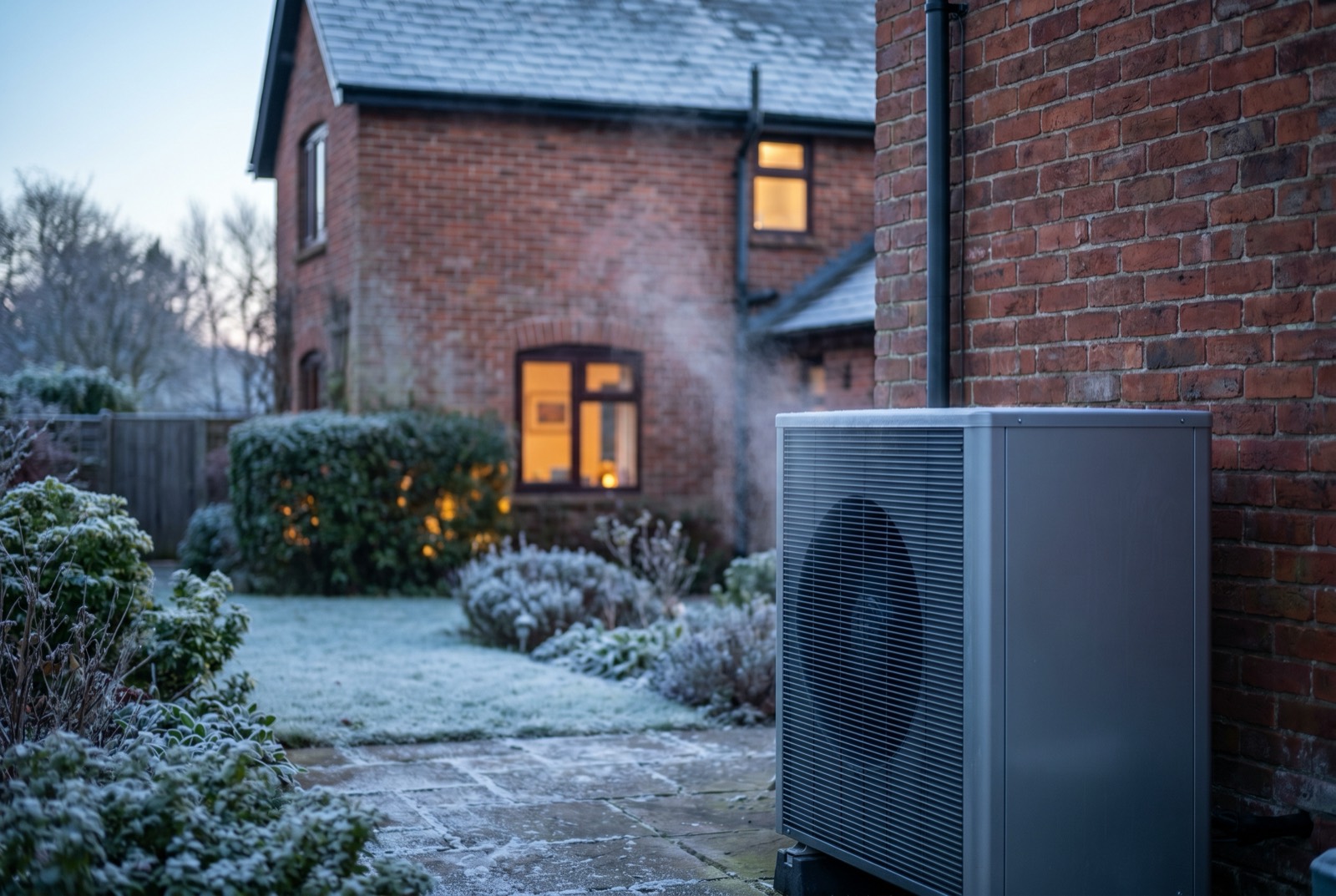
If you're installing a heat pump or a geothermal system and plan to claim assistance through Hydro-Québec's LogisVert, the RBQ licence is non-negotiable. The program requires the company to be registered with the Registraire des entreprises du Québec (REQ) and to hold the appropriate licences issued by the RBQ. The same logic applies to Rénoclimat, the Government of Quebec program that supports insulation, air-sealing, and the replacement of doors and windows: the work must be carried out by a duly licensed contractor.
For the Chauffez vert program, which targeted converting oil or propane heating to electricity, the requirement for a valid RBQ licence applied as well; this conversion component, however, ended on March 31, 2026. In every case, checking the licence up front spares you the unpleasant surprise of having an assistance application rejected after the fact, once the work is finished and the invoices are paid.
Checking an RBQ licence takes less than 30 seconds in the public registry — it's the single most worthwhile move in your entire renovation project.
Tip from the Québec Rénovation team
The questions to ask a contractor before signing
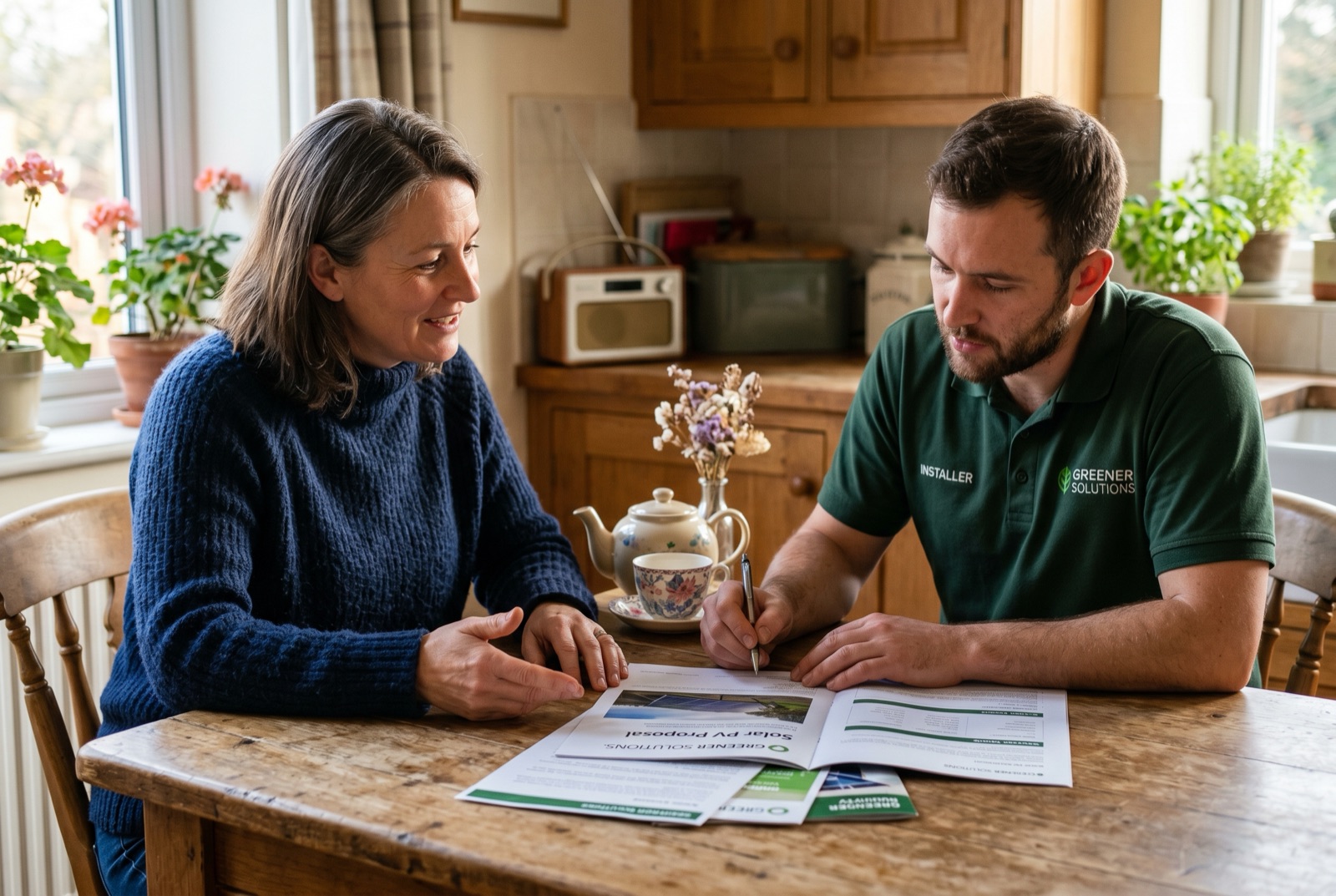
Once the licence has been checked in the registry, a few targeted questions at the quoting stage will help you tell the serious professionals apart. Here's a practical list to keep in mind:
- What is your RBQ licence number? (Write it down and check it yourself in the registry)
- Do your licence subcategories precisely cover the type of work planned?
- Which organization provides your bond, and do you have any outstanding claims?
- Are you registered with the Registraire des entreprises du Québec (REQ)?
- For LogisVert or Rénoclimat assistance, can you confirm you're eligible as a licensed contractor?
- If it's a covered new build, are you accredited by Garantie de construction résidentielle (GCR)?
A trustworthy contractor will answer these questions without hesitation and will give you their licence number unprompted. Reluctance or vagueness on these points is a red flag not to be ignored.
Frequently asked questions
Is checking an RBQ licence really free? Yes. The Licence Holders Registry is available free of charge online at rbq.gouv.qc.ca. The search is done by licence number or company name, and the result appears in less than 30 seconds. No account or payment is required.
What exactly does the licence bond cover? The bond can cover the deposits you've paid, the failure to complete unfinished work, as well as faulty workmanship and defects discovered within the year following the end of the work. The amounts in effect are $20,000 for a specialized contractor and $40,000 for a general contractor.
Can I get financial assistance if my contractor doesn't have an RBQ licence? No. LogisVert, Rénoclimat, and Chauffez vert require installation by a contractor holding a valid RBQ licence. An unlicensed contractor makes your application ineligible, which can cost you the entire grant you were expecting.
What should I do if I suspect unlicensed work? You can report the situation to the RBQ using the "unlicensed work" complaint form available at rbq.gouv.qc.ca, or by phone at 1-800-361-0761. The fines the offending contractor faces are significant, which underscores how seriously the requirement is taken.
Bond amounts, fine schedules, and assistance program conditions change and are indexed or revised periodically. Before committing, always confirm the information at the source: the Licence Holders Registry and the official RBQ pages (rbq.gouv.qc.ca) for the licence, the bond, and the fines; Hydro-Québec for the LogisVert conditions; and Transition énergétique Québec, via quebec.ca, for Rénoclimat. That's the only way to confirm the schedules in effect at the time of your project.
Related on Québec Rénovation